
Should I Sell My Home in Vaughan Now, or Should I Wait?

If you have been watching the headlines and wondering whether you have missed your window, here is the short answer: for most Vaughan homeowners, the decision has far less to do with the market than you would expect, and far more to do with what you are trying to do next.
That is not a way of dodging the question. It is the honest answer after thirty-five years of selling homes in this city, through markets that were frantic and markets that were quiet. The people who look back happiest about their timing are almost never the ones who tried to guess the top. They are the ones who were clear about why they were moving, and who priced the home properly when they did.
Let me walk you through how I would think about it.
What the Vaughan market actually looks like right now
It helps to start with facts rather than headlines.
According to the Toronto Regional Real Estate Board’s July 2026 Market Watch, 272 homes changed hands in Vaughan that month, at an average price of $1,144,631 and a median of $1,065,000.
The more useful number is the MLS Home Price Index benchmark, which adjusts for the mix of homes sold and so compares like with like. In Vaughan it sat at $1,128,500 in July, down 5.5 per cent from a year earlier. For a detached home specifically, the benchmark was $1,507,300, down 5.6 per cent.
So yes, prices have softened. That is the part most people notice.
Here is the part that gets less attention. Across the GTA, new listings in July were down 17.8 per cent compared with a year earlier, while sales were essentially flat — off by less than one per cent. TRREB’s own reading was that market conditions tightened over that period: with sales accounting for a larger share of available listings, buyers may find less room to negotiate if the trend continues. In Vaughan specifically, there were 647 new listings against 1,277 active listings at month end, and homes took an average of 34 days to sell.
On the financing side, things have gone quiet in a good way. TRREB recorded the Bank of Canada overnight rate at 2.3 per cent in July 2026, with prime at 4.5 per cent. Borrowing costs have stopped moving around every few weeks, which matters more to buyer confidence than the exact rate does.
None of that tells you what to do. But it does tell you that this is a market that rewards preparation and punishes wishful pricing.
Read the full market report here.
The question underneath the question
When someone asks me whether they should sell now or wait, I usually ask something back: what happens after you sell?
That single question tends to sort things out quickly.
If you are moving within Vaughan or the GTA, you are selling and buying in the same market. A softer market means you may get less for your home, but you will also pay less for the next one. If you are moving up, a softer market can genuinely work in your favour, because the gap you need to bridge is smaller than it was at the peak.
If you are downsizing and staying local, the same logic applies, though the arithmetic tends to be gentler on you either way.
If you are selling and leaving the region entirely, or selling a property you do not need to replace, then market timing carries more weight. That is one of the few situations where waiting deserves serious thought.
And if the move is being driven by something in your life rather than something in the market — health, a growing family, a home that has become too much to manage — then the market is a detail. An important detail worth handling well, but a detail.
When waiting genuinely makes sense
I am not going to tell you that waiting is always the wrong call. Sometimes it is exactly right.
Waiting can make sense when your home needs work you can realistically complete in a few months, and that work would meaningfully change how it shows. It can make sense when you are close to a life event that changes your plans anyway, such as a retirement date or a family transition. It can make sense when you simply are not ready, because selling a home you have lived in for decades is not a transaction you want to rush into unprepared.
And it can make sense when the numbers do not work yet. If selling now would leave you short of what you need for the next chapter, waiting while you plan is a reasonable decision, not a failure of nerve.
What I would gently push back on is waiting purely to see whether prices recover. Nobody can tell you when that happens, and homes carry real costs while you wait.
When waiting quietly costs you
The costs of waiting are easy to overlook because they arrive slowly.
Every month you hold a property, you are paying for it — mortgage interest, property taxes, insurance, maintenance, utilities. On a Vaughan home, that adds up to a meaningful sum over a year.
There is a less obvious cost too. Homes that sit unlisted for a long time while their owners deliberate often need more work by the time they finally come to market, not less. Deferred maintenance compounds. So does the emotional weight of a decision left open.
For seniors and long-time homeowners in particular, I have seen waiting turn a move that could have happened calmly and on their own terms into one that had to happen quickly, under pressure, at a moment of someone else’s choosing. That is the outcome I most want to help people avoid.
How to decide without guessing
You do not need to predict the market. You need three pieces of information.
The first is what your home is realistically worth today, based on what has actually sold nearby recently — not an online estimate, which cannot see your kitchen, your lot, or your street.
The second is what the move you are planning would actually cost, all in. Commission, legal fees, any work worth doing before listing, moving costs, and the price of wherever you are going next.
The third is what your timeline genuinely allows. Not the ideal, but the real one.
Put those three together and the answer usually presents itself without much drama. In my experience, most people already know what they want to do. What they are missing is the information that lets them feel confident about it.
A note on the Vaughan market specifically
One thing worth remembering: Vaughan is not one market. A detached home in Kleinburg, a townhouse in Maple and a condo near the Vaughan Metropolitan Centre are each responding to different buyers and different conditions.
Citywide averages are useful for context and almost useless for pricing your specific home. What matters is what has sold on streets like yours, to buyers like the ones who will be looking at your property.
That is the kind of detail that is hard to get from a headline, and it is usually where the real answer lives.
If you are weighing this up and would like to talk it through, I am always happy to have that conversation. There is no obligation and no pressure — just an honest look at your options, your timing, and what makes sense for you.


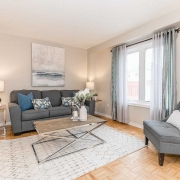


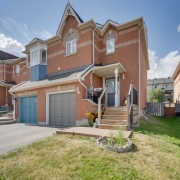


 Home Selling Vaughan

Leave a Reply
Want to join the discussion?Feel free to contribute!